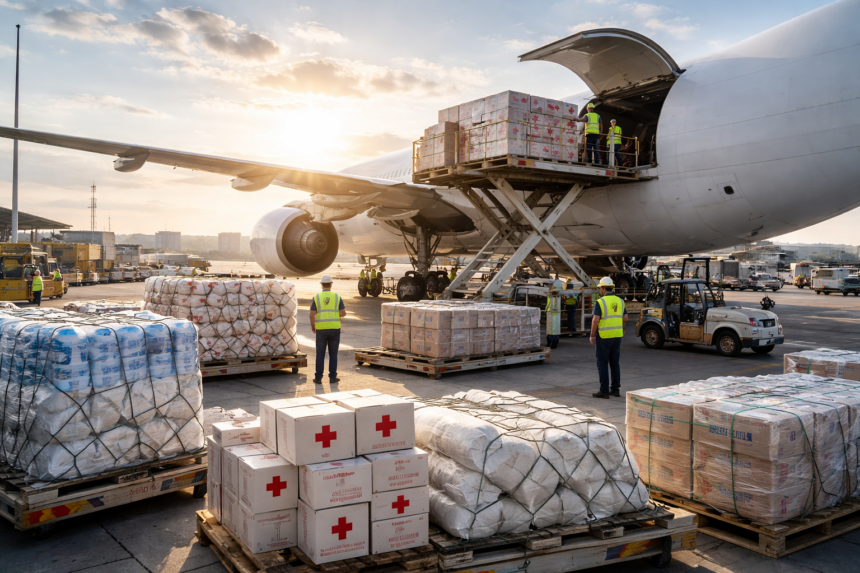

When humanitarian aid arrives in a crisis zone, the final moment often looks simple: an aircraft lands, cargo is unloaded, and supplies move to distribution points. In reality, that visible stage is only the end of a much longer process.
Humanitarian air cargo is not just about transportation. It is about moving essential goods under pressure, often in places where normal logistics no longer work properly. Food, medicine, water, shelter materials, and medical equipment may all need to reach affected areas quickly, even when infrastructure is damaged or local access is limited.
How Humanitarian Air Cargo Operations Are Structured
To understand the process more clearly, it helps to look beyond the aircraft itself and focus on the full logistics chain. A general overview is available here https://air-cargo-global.com/special-cargo/humanitarian-aid/.
Humanitarian air cargo usually involves several linked stages: needs assessment, cargo preparation, airport handling, air transport, arrival procedures, and final delivery. The speed of a flight matters, but the success of the mission depends just as much on what happens before departure and after landing.
Stage 1: Assessing Needs and Setting Priorities
Before cargo is moved, responders identify what is needed most urgently. In one situation, priority may be medicine and trauma supplies. In another, it may be food, water treatment equipment, or temporary shelter materials.
This stage is critical because aircraft capacity is limited. When space is tight, planning has to focus on what will have the greatest practical value on arrival.
Stage 2: Preparing the Cargo for Flight
Once supplies are selected, they must be packed, labeled, documented, and prepared for air transport. This sounds routine, but mistakes at this stage can slow the entire operation.
Mixed humanitarian loads are common. One shipment may contain medical goods, dry food, hygiene items, and technical equipment. Each category may require different handling conditions, especially if the cargo is fragile, regulated, or sensitive to temperature.
Stage 3: Airport Handling and Flight Preparation
At the airport, cargo is checked, screened, documented, and organized for loading. Weight distribution, packaging stability, and loading order all matter.
This stage becomes more complex when several organizations are involved in the same movement. Coordination is essential because humanitarian operations often bring together aid agencies, transport providers, airport teams, and local authorities.
Stage 4: Air Transport in Difficult Conditions
The flight itself is often the fastest part of the process, but not always the easiest. Humanitarian cargo may need to reach areas with limited airport capacity, restricted ground support, or unstable operating conditions.
In some emergencies, air transport is used because road access is damaged, unsafe, or too slow. That makes the aircraft not just a delivery tool, but a way to reach places that are otherwise difficult to serve quickly.
Stage 5: Arrival, Clearance, and Final Delivery
Landing does not mean the mission is finished. After arrival, cargo may still need to pass through local procedures, be sorted again, and move onward to hospitals, shelters, warehouses, or field distribution points.
This last stage is often one of the hardest. Roads may be damaged, storage may be limited, and conditions on the ground may change quickly. A successful humanitarian flight therefore depends on what happens after touchdown as much as on the transport itself.
Why Humanitarian Air Cargo Is So Complex
Commercial logistics usually works around schedules, contracts, and predictable flows. Humanitarian logistics works in a different environment. Needs can change suddenly, access can be uncertain, and every delay can reduce the practical value of the cargo.
That is why humanitarian air cargo requires more than speed. It requires coordination, flexibility, and careful decisions at every stage.
Conclusion
Behind every humanitarian air cargo operation is a network of planning, handling, and problem-solving. The aircraft is only one part of that system.
Looking behind the scenes makes one thing clear: humanitarian air cargo is not simply about moving goods from one airport to another. It is about making sure essential supplies can reach people under conditions where ordinary logistics may no longer be enough.